Stories in silhouette
Physical theatre and projected scenes build a narrative without a conventional set.
Team BOOMBOX / Illusion & live media
Bodies, silhouettes and projection become characters, places and transitions.
The creative approach
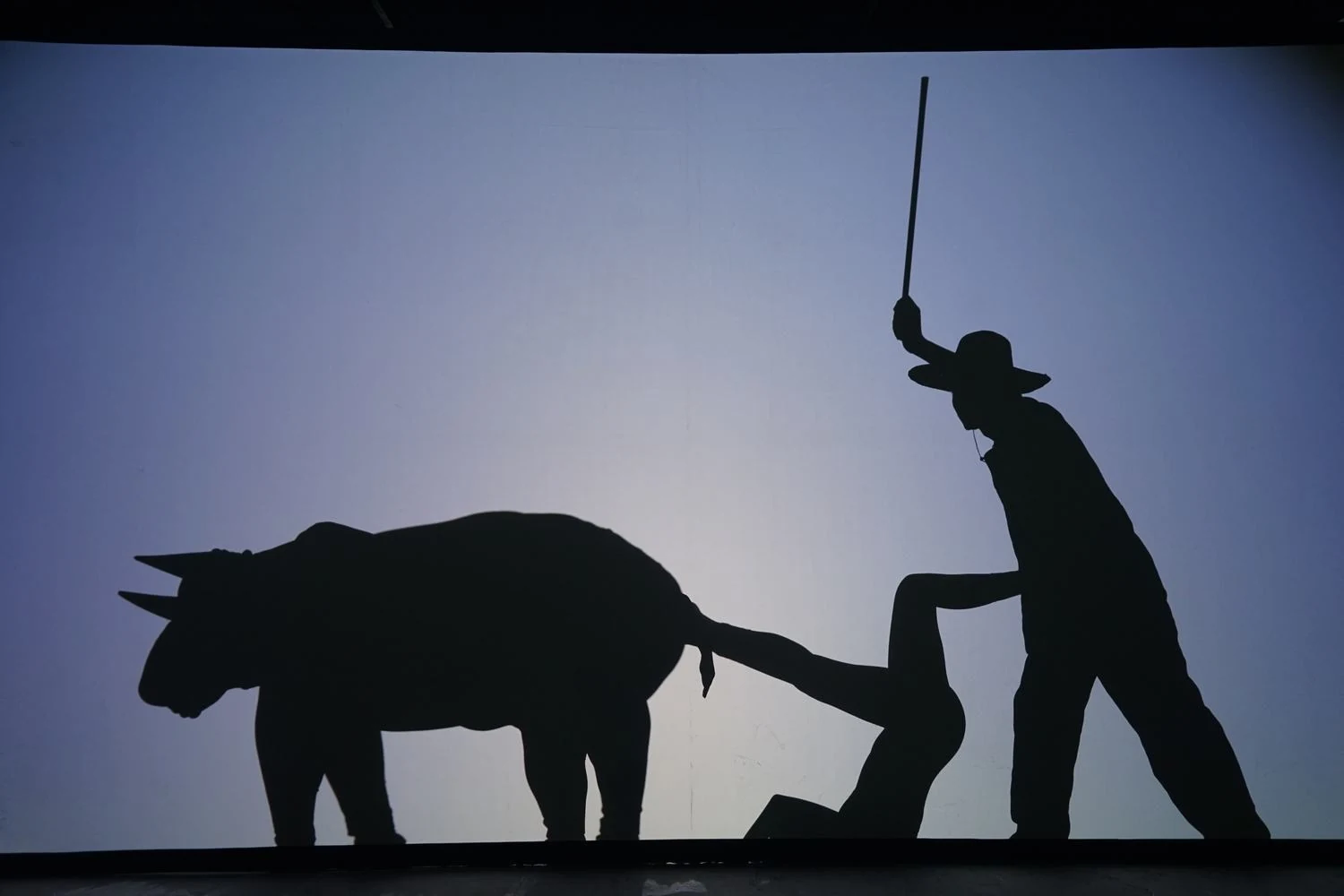
Performers combine and separate behind a lit surface to make recognisable images. The sequence can tell a story through changes of scale, body shape and projected setting.
Within this format
Physical theatre and projected scenes build a narrative without a conventional set.
Historical programme titles include Home for the New Year, Travel Diary and The Long March.
Plan this performance
The transition between two body shapes can carry as much meaning as the final image. Shadow performance is useful when the audience should follow a recognisable journey through people, objects and places.
Which images must the audience recognise, and what connects them into a story?
What screen or lit surface is available, and what performance and projection space sits behind it?
How will music, body shapes and projected settings share the storytelling?
From enquiry to development
Bring a story outline or theme and the proposed stage arrangement. Develop key silhouette moments and transitions, then review how their scale and clarity work for the audience.
Start with the story and its audience. Screen dimensions, projection position and the space behind the surface inform how the silhouettes are built.
Start a conversation
Tell us about the occasion, venue and intended programme. We can discuss a repertoire starting point and the development your project needs.